The Kitchen Work Triangle Explained
Why your stove, sink, and fridge placement matters more than you think when planning a renovation.

The "Golden Rule" of Kitchen Flow
I once lived in a rental where the fridge door opened directly into the stove. If my wife was cooking, I couldn't get a drink of water without asking her to move. It was maddening.
That is what architects call a broken "Work Triangle."
While the concept was developed back in the 1940s by the University of Illinois School of Architecture, the physics of cooking haven't changed. You need to move between the Sink, the Fridge, and the Stove without tripping over the dog or walking a marathon.
The 3 Hard Rules
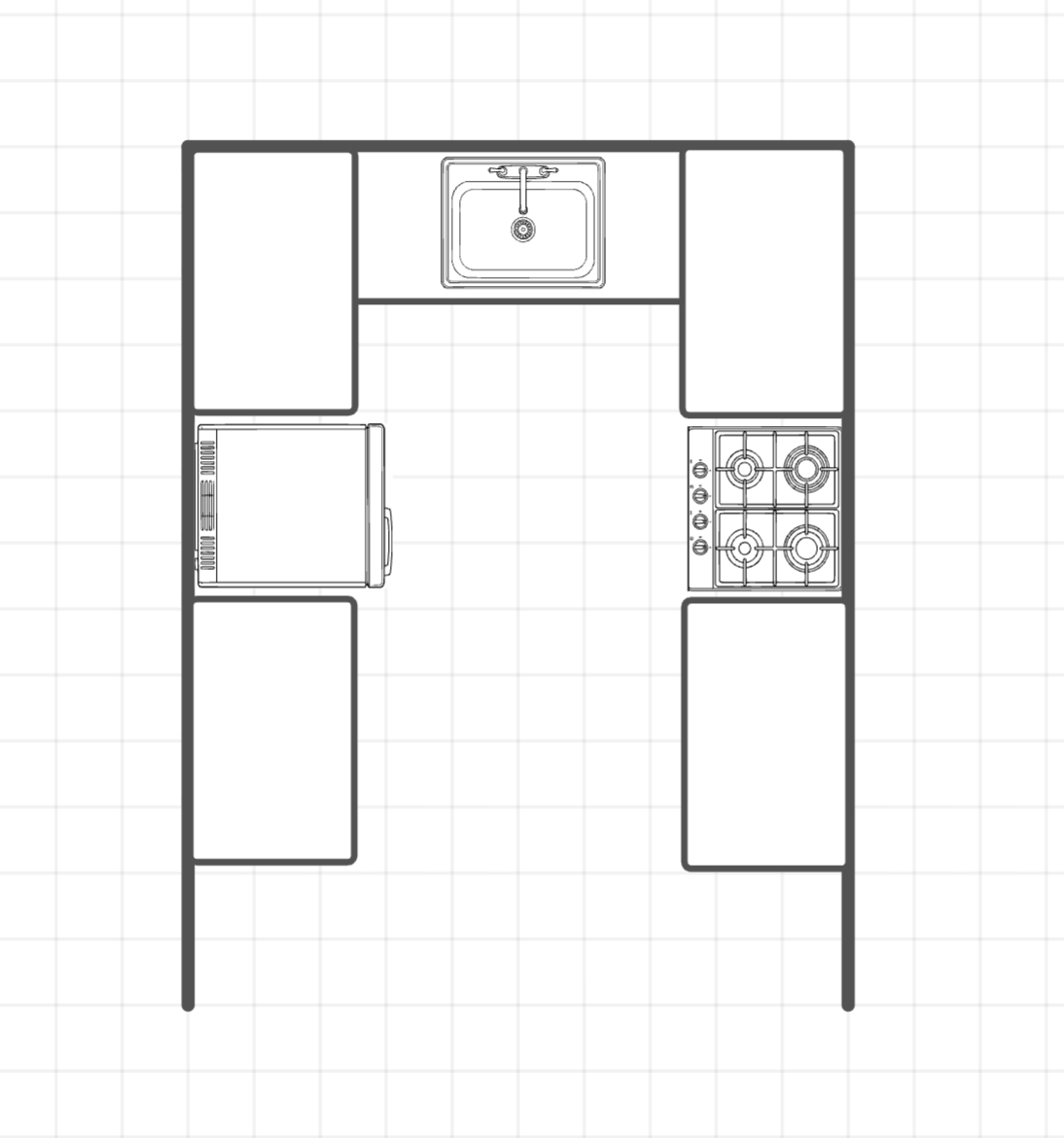
When I am designing a kitchen layout in RoomyLab, I always check these three specific measurements. If you violate them, your kitchen will feel awkward.
- The "Leg" Limit: Each leg of the triangle should be between 4 feet and 9 feet.
- Why? If the distance is more than 9 feet, you will hate cooking pasta. Carrying a pot of boiling water across the room is dangerous and annoying.
- The "Cramped" Zone: If any leg is less than 4 feet, you are going to be bumping elbows with anyone else in the room.
- The Traffic Cop: Never let a major walkway (like the path to the backyard) cut through the triangle. If kids have to run through your work zone to get outside, accidents will happen.
The Total Sum Rule
To do a quick check, add up the lengths of all three sides of the triangle.
- Too Small: Under 13 feet total.
- Too Large: Over 26 feet total.
- Just Right: 13–26 feet.
Does the Triangle still matter?
Some designers say the triangle is dead because modern kitchens have islands and "prep zones."
I disagree. While we have more zones now (coffee stations, second sinks, wine fridges), the Primary Triangle is still king. If you break it, your kitchen will feel "off," no matter how expensive your cabinets are.
Common Layout Mistakes
- The Island Barrier: Putting a massive island right between the fridge and the sink. If you have to walk around an island to wash an apple, your design is flawed.
- The Door Conflict: Placing the fridge in a corner where the door can't open 90 degrees against the wall. Always leave a 2-3 inch filler strip next to a wall.
- The Dishwasher Trap: Placing the dishwasher so that when the door is open, it blocks the stove.
How to "Stress Test" Your Kitchen
Don't guess. Draw it. Here is my workflow in the RoomyLab Editor:
- Drop the Big Three: Drag a Sink, Stove, and Fridge onto your canvas.
- Draw the Lines: Use the Dimension Tool to draw a line connecting the center of each appliance.
- Check the Sum: Add up the three numbers.
- Walk it Virtually: Imagine making a sandwich. Fridge -> Sink (wash lettuce) -> Counter. Is the path clear?
I have saved users from making expensive layout mistakes just by having them drag the fridge 12 inches to the left in the app before calling a contractor.
Frequently Asked Questions
Q: What if I have a Galley Kitchen? A: In a galley (two parallel counters), the triangle is just a zigzag. This is actually one of the most efficient layouts, provided the aisle is at least 48 inches wide.
Q: Does the microwave count? A: Generally, no. The microwave is a "secondary" zone. Keep it near the fridge for reheating leftovers, but it doesn't anchor the main triangle.
Q: What about a pot filler? A: A pot filler above the stove is a luxury that helps, but you still need to carry the hot water back to the sink to drain it. Don't let a pot filler trick you into placing the sink too far away.
Inspired? Start planning now.
Use our free browser-based tool to visualize this advice in your own home. No account needed.
Launch RoomyLab Editor