Entryway & Mudroom Standards: Bench Heights, Hooks, and Flow
Stop tripping over shoes. Here are the critical dimensions for building a functional mudroom bench, hanging hooks, and maximizing shoe storage.
The "Drop Zone" Chaos
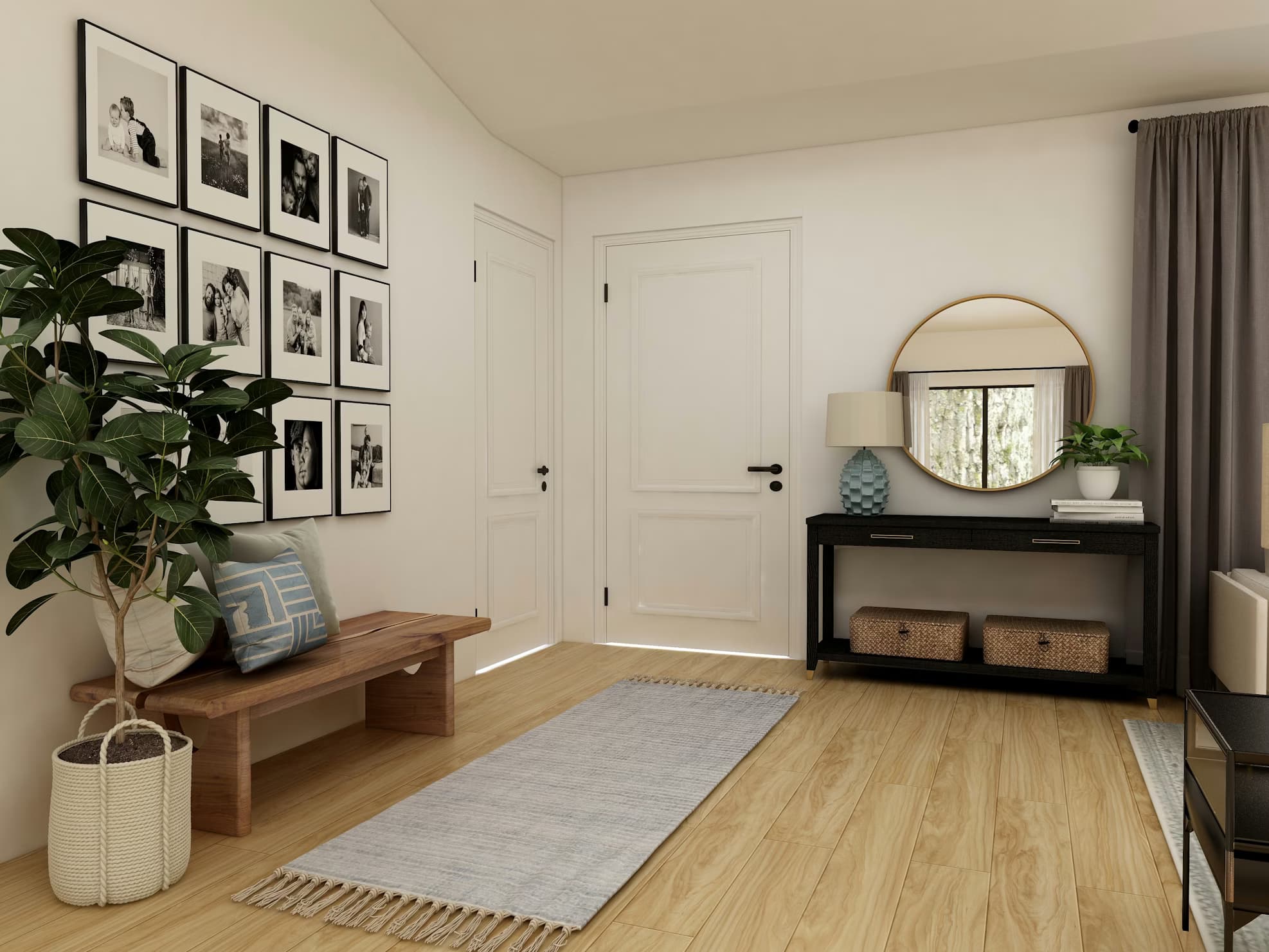
The entryway is the hardest working 50 square feet in your house. It is where you dump keys, kick off muddy boots, and wrestle wet coats off toddlers.
If you don't have a system—and specifically, a system built to the right dimensions—this space becomes a tripping hazard.
Whether you are building a custom DIY mudroom locker system or just buying a hallway console table, using standard ergonomic measurements ensures the space functions smoothly.
1. The Mudroom Bench
The centerpiece of any mudroom is the place where you sit to put on shoes.
- Standard Height: 18 to 19 inches. This is the standard chair height. If you go higher (24"+), your feet dangle, and it's hard to tie laces. If you go lower (12-15"), it is difficult for adults to stand back up.
- Standard Depth: 15 to 18 inches.
- Toe Kick: If you are building a built-in bench to the floor, leave a 2-3 inch recess at the bottom (a toe kick) so you can tuck your feet back when standing up.
2. Coat Hooks & "Lockers"
If you are installing hooks, spacing is critical to prevent "coat bulk" overlap.
Hook Height
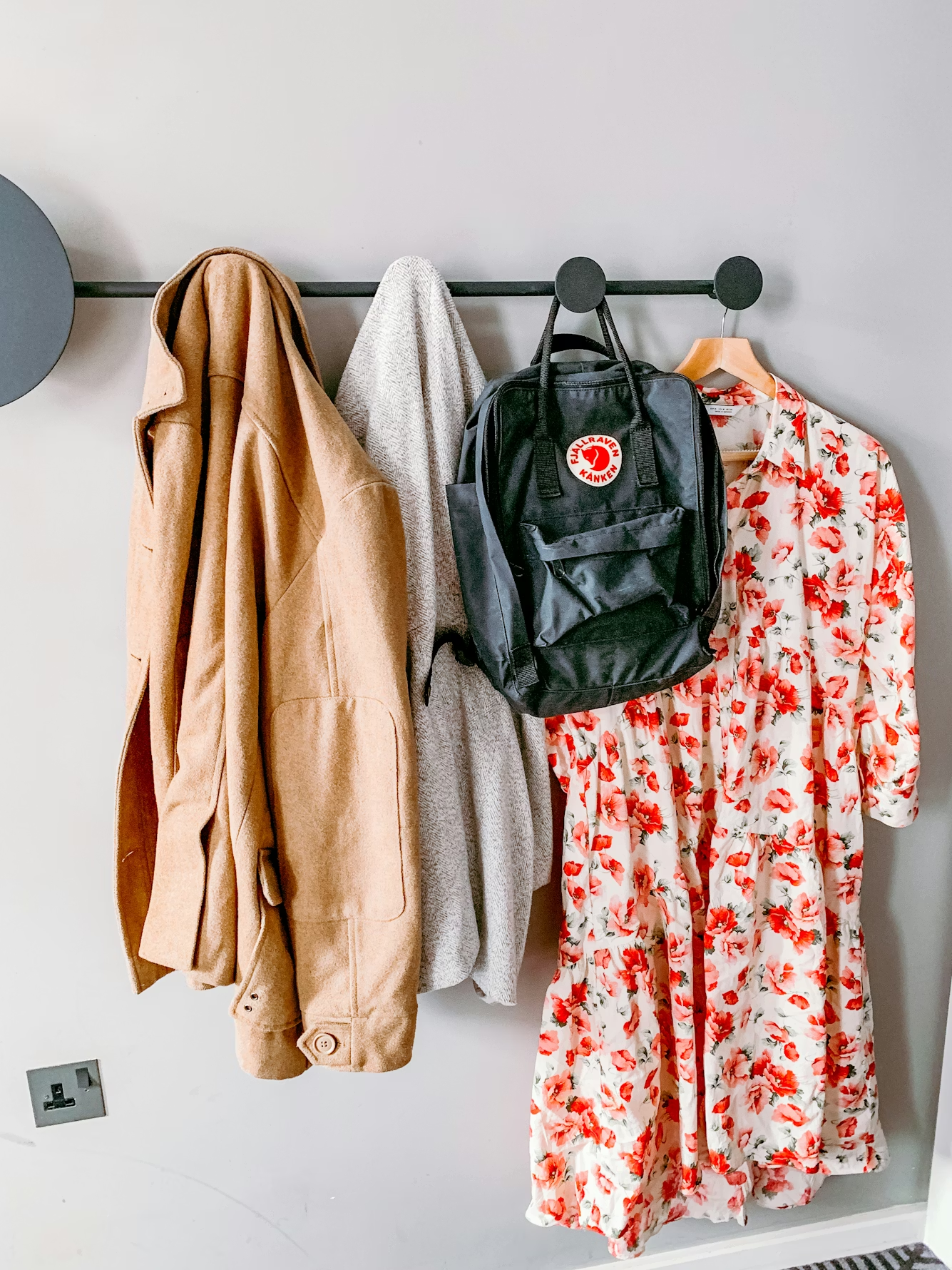
- Adults: Mount hooks at 60 to 65 inches from the floor. This prevents long coats from dragging on the bench seat below.
- Kids: Mount a secondary row at 42 to 48 inches. This empowers them to hang their own backpacks.
Hook Spacing
- Minimum Spacing: 8 to 10 inches apart. Winter coats are bulky. If you place hooks 4 inches apart, you will only be able to use every other hook.
- Locker Width: If building individual "cubbies" or lockers, the standard width is 12 to 15 inches per person.
3. Shoe Storage Dimensions
Shoes are surprisingly long. A common mistake is buying or building shoe shelves that are too shallow.
- Men's Shoes: A size 11-12 shoe needs 12 to 13 inches of depth.
- Boots: Tall rain boots or winter boots need 18 to 20 inches of vertical clearance. Don't make all your shelves 6 inches high!
- Cubby Size: A standard 6" x 6" cubby is often too small for sneakers. Aim for 8" wide x 7" high for a versatile fit.
4. The "Landing Strip" (Console Tables)
In a formal foyer, you need a surface for keys and mail.
- Standard Height: 30 to 36 inches (Table height to Counter height).
- Clearance: If your hallway is narrow, choose a "console" depth of 10 to 12 inches.
- Traffic Flow: You must maintain a 36-inch walkway past the table. If your hallway is only 40 inches wide, you cannot fit a table there. Use a wall-mounted floating shelf instead.
5. Door Swing & Rugs
The most annoying sound in the world is a door dragging across a rug.
- The Problem: Entry doors usually have a "sweep" on the bottom to seal out drafts. This leaves very little clearance (sometimes under 1/4 inch).
- The Fix:
- Measure the gap between your open door and the floor.
- Buy a "low pile" or "flatweave" rug that is thinner than that gap.
- Alternatively, recess a "mat well" into the floor (common in Europe/commercial spaces).
6. Durable Materials
Entryways see water, mud, and grit.
- Flooring: Avoid hardwood in the immediate 4x4 foot zone inside the door. It will warp from water damage. Porcelain tile or slate is the gold standard here.
- Paint: Use Satin or Semi-Gloss paint on mudroom walls. Flat paint will hold onto scuff marks and dirt fingerprints forever.
Test Your Traffic Flow
Before you commit to a layout, visualize the space.
- Open RoomyLab.
- Draw your hallway or mudroom walls.
- Check the Swing: Look at the door swing arc (the curved line on the floor plan).
- Visual Check: Ensure that the arc doesn't overlap with the areas where you plan to place furniture or where you need to stand to take off your coat.
If the arc eats up the entire hallway, you might need to rethink your layout before you start building.
Inspired? Start planning now.
Use our free browser-based tool to visualize this advice in your own home. No account needed.
Launch RoomyLab Editor