Small Bedroom Layout Ideas: How to Fit a Queen Bed and Desk in 10x10
100 square feet doesn't feel like enough, but with the right layout, you can fit a workspace and a queen bed without sacrificing style.
The 10x10 Challenge
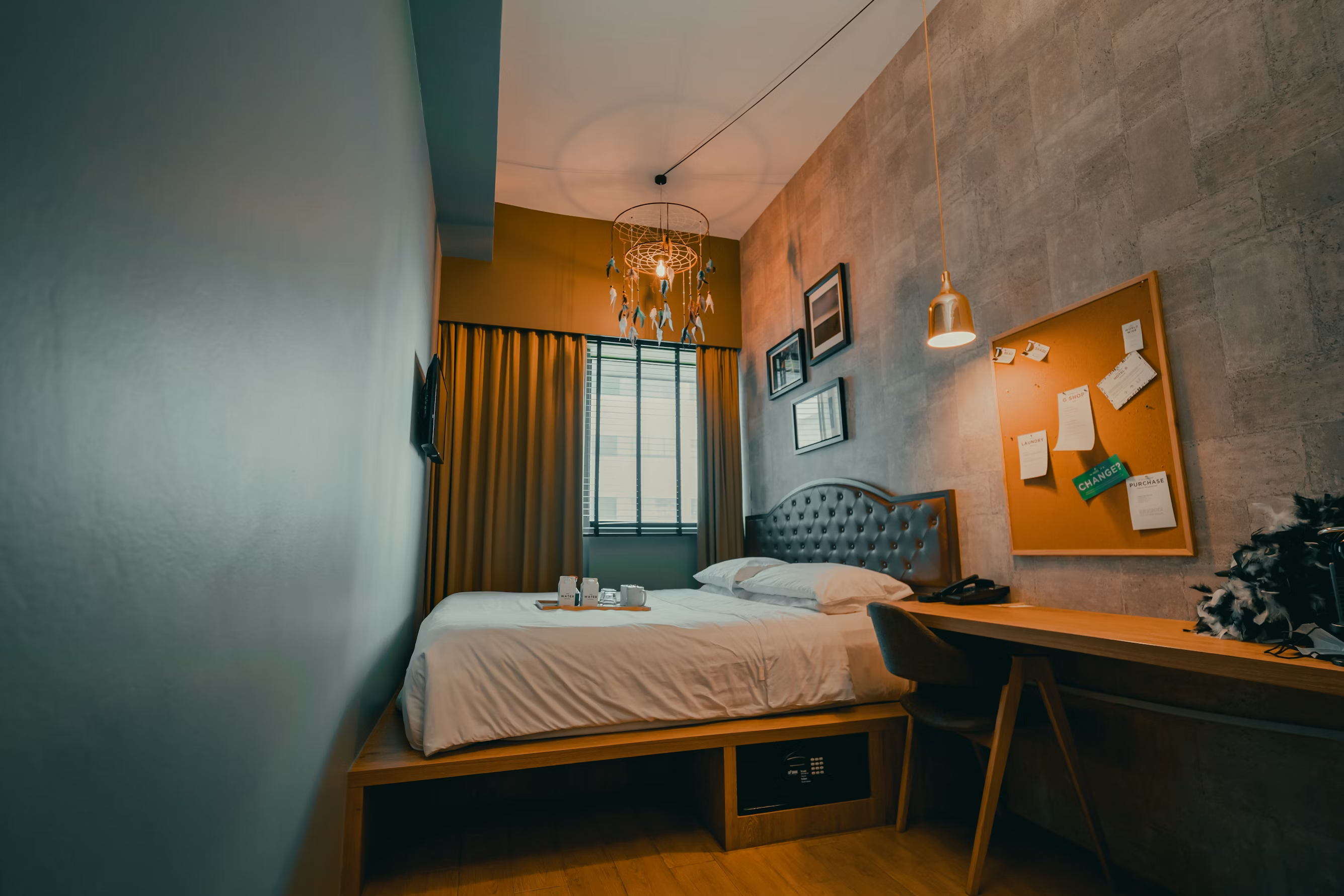
The 10-foot by 10-foot bedroom is the most common size for guest rooms and secondary bedrooms in the US. It is exactly 100 square feet.
On paper, that sounds fine. But once you drag in a Queen bed (which eats up about 33 square feet on its own), things get claustrophobic fast.
The challenge? The Work-From-Home squeeze. You need a place to sleep and a place to Zoom, but you don't want your bedroom to feel like a cubicle.
Here are the three best layouts to maximize every inch of a 10x10 room.
The Math: What Are We Working With?
Before we move furniture, let's look at the numbers.
- Queen Bed: 60" wide x 80" long.
- Standard Desk: 48" wide x 24" deep.
- Clearance Needed: You ideally want 24-30 inches of walking path around the bed.
Layout 1: The "Nightstand Swap" (The Zoom Friendly Option)
This is the most efficient layout for space and video calls.
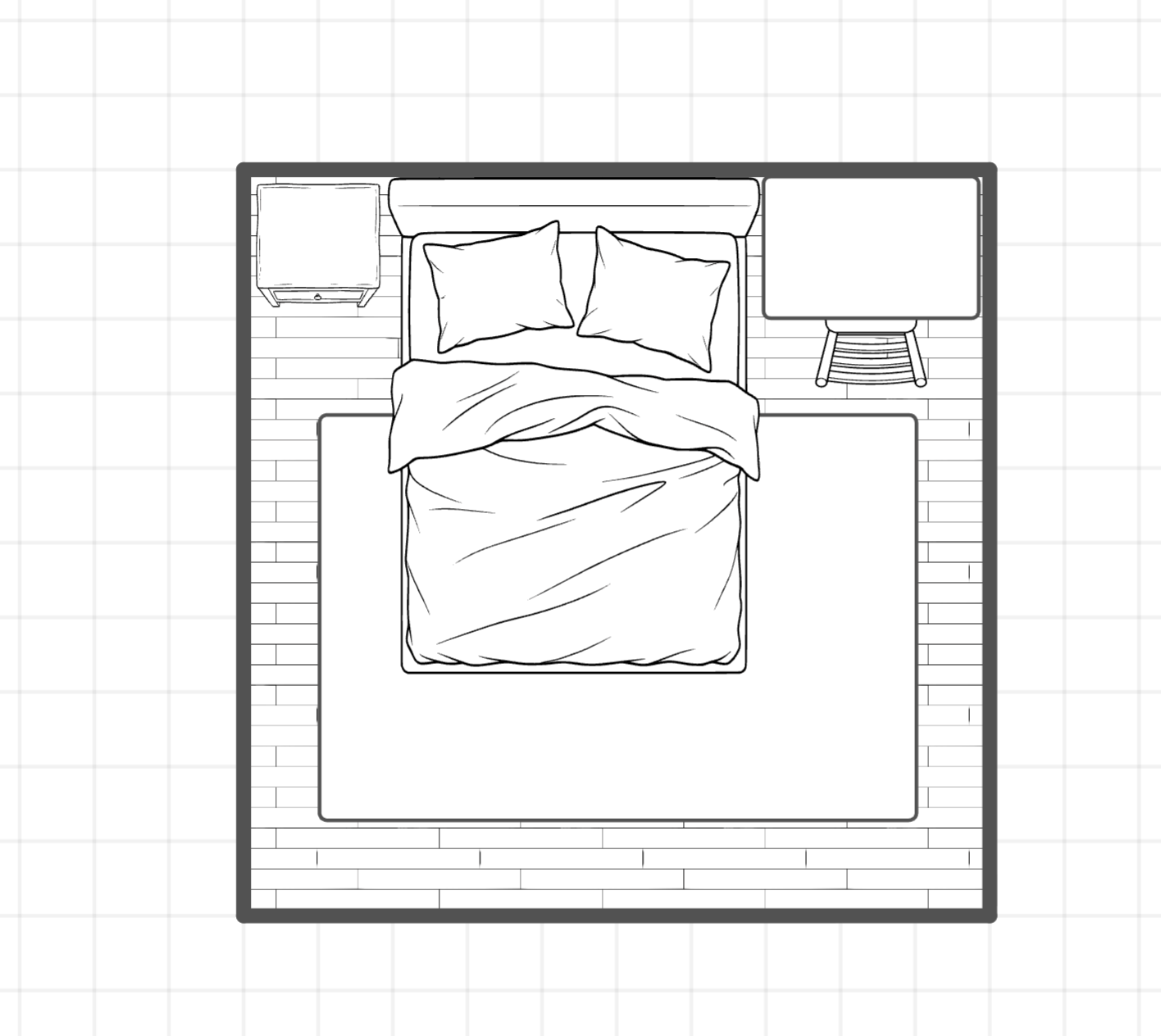
Instead of trying to squeeze a desk into a corner, replace one of your nightstands with a desk.
- The Setup: Center the bed on the main wall. Place a regular nightstand on the left. Place a small writing desk (approx. 40-48 inches wide) on the right.
- Why it works: You use the desk lamp as your bedside reading light, saving floor space.
- The Zoom Bonus: Because you are facing the headboard wall, your camera points away from the bed. Your background will be the opposite wall or closet, keeping your sleeping area private.
Layout 2: The "Opposite Wall" (The Mental Separator)
If you find it hard to focus while sitting inches away from your pillow, you might need visual separation.
- The Setup: Push the bed slightly off-center on one wall. Place the desk on the opposite wall, facing the bed.
- The Benefit: When you are working, you are looking at the wall, not the bed. This helps separate "rest mode" from "work mode."
- The Trade-off: Since your back is to the room, your video call background will be your bed. You will likely need to use a virtual background or blur filter here.
- The Squeeze: A Queen bed (80") + Desk (24") = 104 inches. In a 120-inch room, you only have 16 inches for your chair. You must choose a slim desk and a chair that tucks completely under it.
Layout 3: The Corner Tuck
Designers usually hate pushing a bed into a corner because it makes making the bed a nightmare. However, in a 10x10 room, it might be necessary to gain floor space.
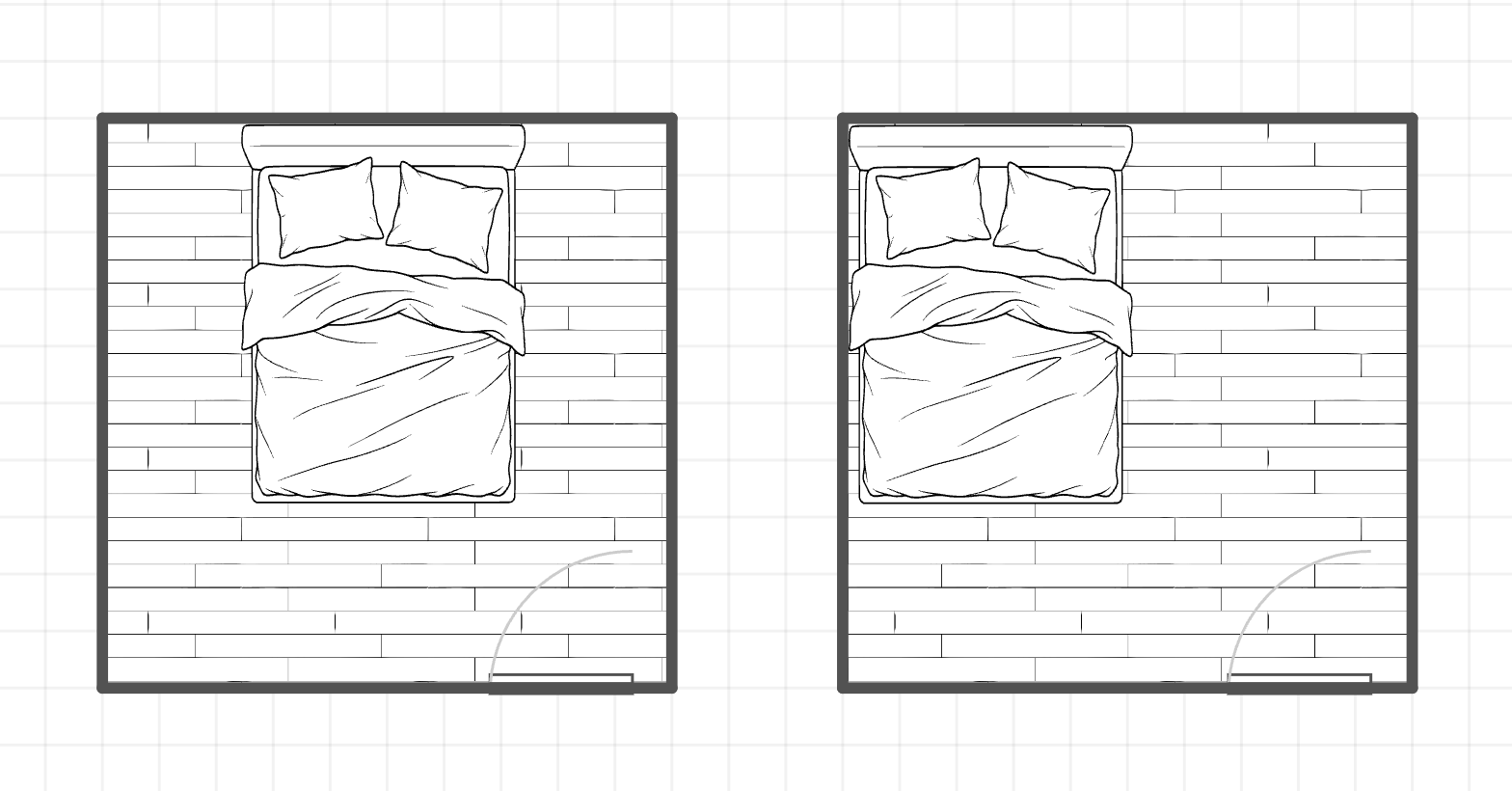
- The Setup: Push the bed into the corner (long side against the wall). This opens up a massive "L" shape of floor space in the rest of the room.
- Best For: Guest rooms or single sleepers. It is annoying for couples because one person has to crawl over the other to get out.
3 Rules for Small Rooms
1. Vertical Storage is King
You don't have floor space for a dresser and a desk.
- Solution: Install wall-mounted shelves above the desk for books and office supplies. Use the closet for clothes.
2. Keep it Light
Dark furniture feels "heavy" and consumes visual space. In a 10x10 room, opt for white, light wood, or glass/acrylic desks. Seeing the floor through the furniture makes the room feel larger.
3. Watch the Door Swing
In a small room, the entry door eats up about 9 square feet of swing space.
- Pro Tip: Ensure your desk chair isn't in the "danger zone" where the door might hit it when opened.
Test It Before You Lift It
Will the chair actually fit? Don't guess.
- Open RoomyLab.
- Draw a 10x10 box.
- Drag in a Queen Bed (60x80).
- Drag in a Desk.
- Move them around to see if you have walking paths.
If it works in the editor, it will work in your home.
Inspired? Start planning now.
Use our free browser-based tool to visualize this advice in your own home. No account needed.
Launch RoomyLab Editor