How to Choose the Right Rug Size: The Architect's Guide to Layouts
A rug that is too small makes your room look cheap. Here are the exact rules for living rooms, dining rooms, and bedrooms to ensure you stop wasting money on return shipping.
The #1 Design Mistake That Ruins a Room
If you ask me or any other interior architect what mistake we see most often in client photos, the answer is unanimous: The rug is too small.
I get it. Rugs are expensive. When you are staring at the price tag, the 5'x8' looks a lot more appealing than the 8'x10' or the 9'x12'. It is tempting to save that $300.
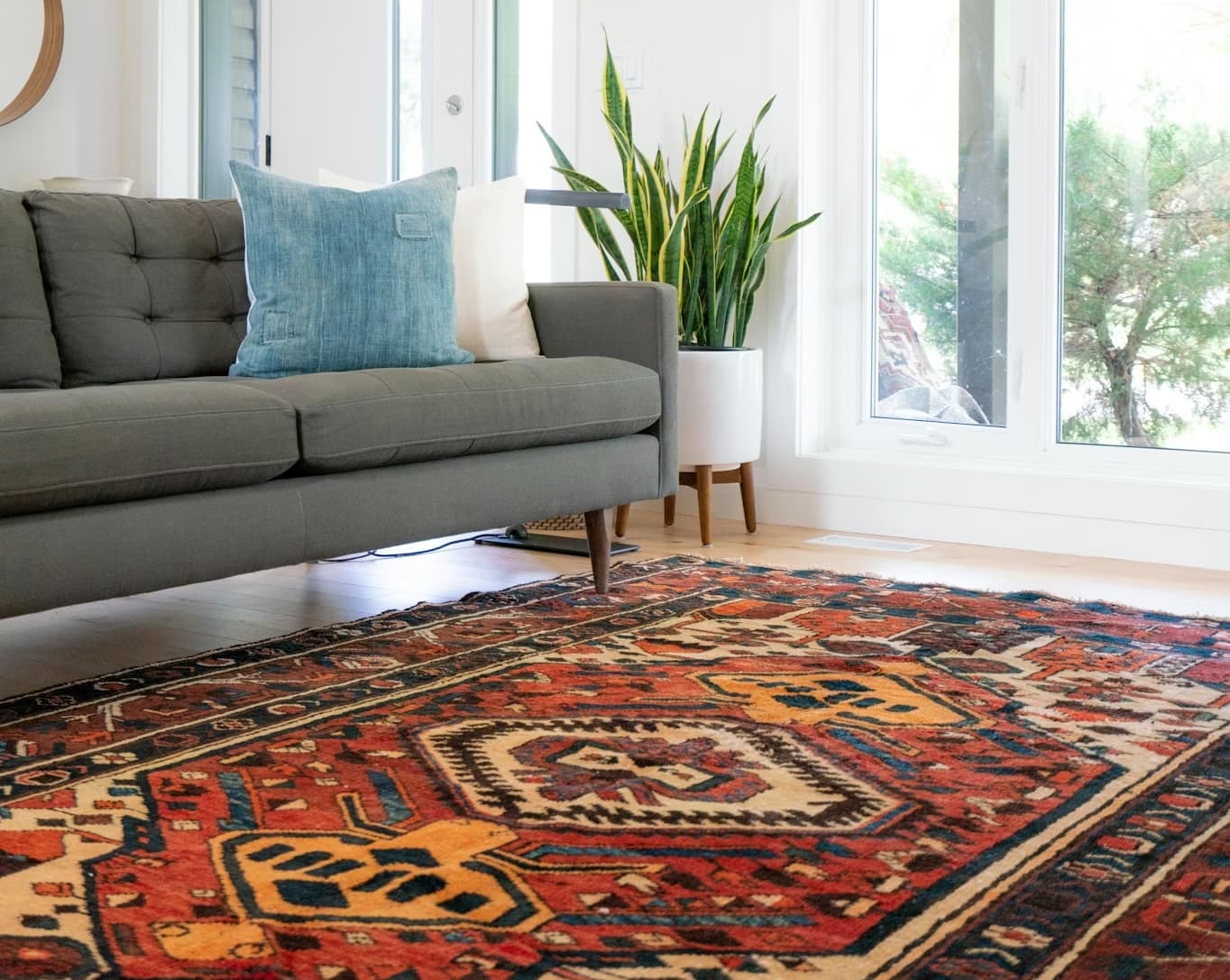
But here is the hard truth: A small rug creates a "floating island" effect. It visually shrinks the room, makes your furniture look disconnected, and signals "cheap" even if the sofa cost a fortune. A properly sized rug, on the other hand, expands the room and anchors your furniture into a cohesive zone.
Here are the golden rules of scaling—and how to test them in RoomyLab before you drop the cash.
1. The Living Room: Anchor the Space
In the living room, the rug serves a structural purpose: it defines the "conversation zone." Without it, your furniture is just floating in a sea of flooring.
The "Front Legs" Rule (The Standard)
This is the most common and versatile layout for average-sized homes.
- The Rule: The rug should be large enough that the front legs of the sofa and all accent chairs sit on the rug, while the back legs rest on the bare floor.
- The Benefit: This visually connects the furniture pieces together.
- The Measurement: The rug should extend 6 to 10 inches under the front of the sofa.
The "All Legs On" Rule (The Luxe Look)
If you have a large open-concept space, this is the superior choice.
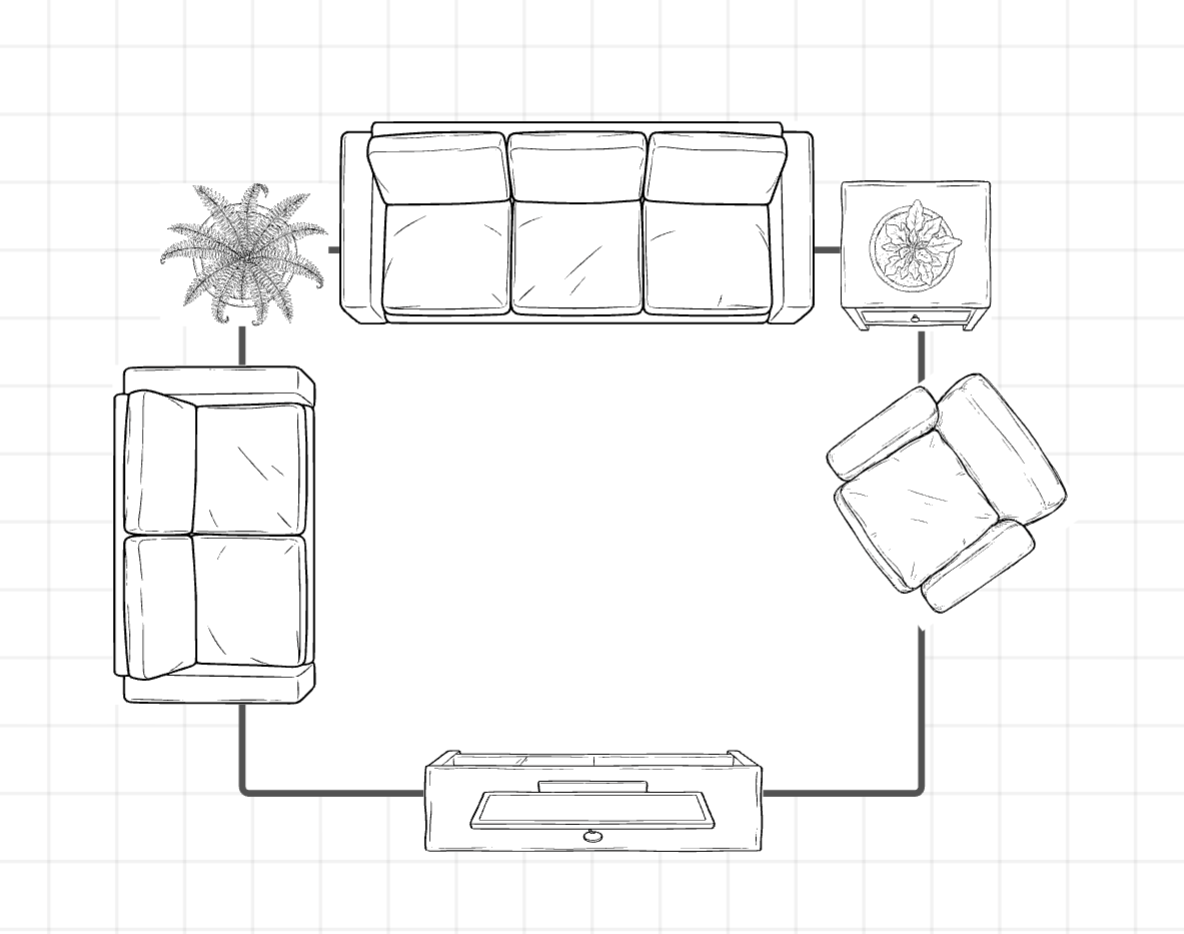
- The Rule: The rug is massive enough that the entire footprint of the furniture—sofa, side tables, and chairs—sits completely inside the rug borders.
- The Benefit: It creates a "room within a room" and feels incredibly high-end.
- The Caution: You need to leave 12 to 18 inches of bare floor visible between the edge of the rug and the walls. If the rug touches the walls, it looks like ill-fitted wall-to-wall carpeting.
The "Postage Stamp" (What to Avoid)
Never buy a rug that floats in the center of the room without touching any furniture legs. If your coffee table is the only thing on the rug, the rug is too small.
2. The Dining Room: The Slide Test
Dining room sizing is not about aesthetics; it is about safety and mechanics.
The Golden Rule: The rug must be large enough that when a guest pulls their chair out to sit down or stand up, the back legs of the chair stay on the rug.
If the back legs drop off the edge of the rug, two things happen:
- The Wobble: Guests feel unstable.
- The Snag: When they try to scoot forward, the chair legs catch on the rug edge, ruining the binding and driving your guests crazy.
The Math: Measure your dining table (length and width). Add 24 inches to every side.
- Example: If your table is 4 feet wide, your rug needs to be 4' + 2' + 2' = 8 feet wide.
- Standard: Most 6-person dining tables require an 8'x10' rug minimum.
3. The Bedroom: Comfort First
Bedroom rugs are about tactile comfort. You want to step onto something soft when you wake up, not cold hardwood.
The "Perpendicular" Placement
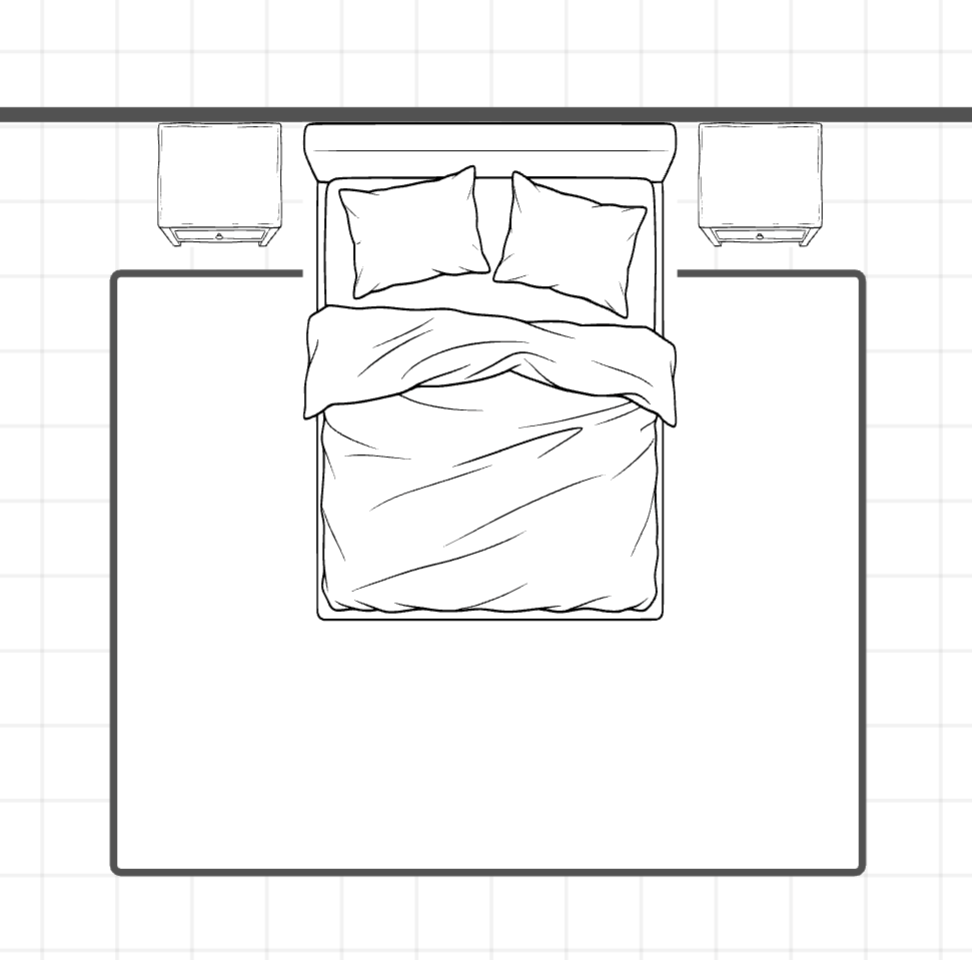
Do not put the rug all the way against the wall behind the headboard. Your nightstands should sit on the hard floor.
- The Placement: Orient the rug perpendicular to the bed. Start the rug about 12 to 18 inches away from your nightstands (roughly 2/3 down the bed) and let it extend past the foot of the bed.
- Queen Bed: An 8'x10' rug is the standard. This gives you about 2.5 feet of soft rug on either side of the bed to step onto.
- King Bed: You need a 9'x12'. If you use an 8'x10' with a King, the rug will look like a bathmat.
The "Runners" Alternative
If you have beautiful herringbone floors that you don't want to hide, skip the area rug. instead, place two matching runners (usually 2.5' x 8') on either side of the bed. This saves money and keeps the look airy.
How to Visualize This in RoomyLab
Rugs are big rectangles, which makes them the easiest thing to test in our editor. Don't guess the size—see it.
- Set Up the Room: Draw your walls and drag in your sofa/bed from the library.
- Add the Rug: go to the "Decor" tab and select "Area Rug".
- Resize to Standard: Don't just drag the corners randomly. Use the Properties Panel to type in exact retail dimensions (e.g., width: 8', length: 10').
- The Layer Test: Drag the rug under your furniture. Zoom in. Do the front legs fit? If not, delete it and type in 9' x 12'.
3 Expensive Mistakes to Avoid
- Buying High-Pile for Dining: Never put a shag rug or a high-pile Moroccan rug under a dining table. Crumbs will get lost forever, and chairs won't slide. Stick to flat-weave or low-pile wool.
- Covering Floor Vents: If you have floor-mounted HVAC vents, do not cover them with a rug. It forces air back into the ductwork, which can damage your furnace system and reduce efficiency.
- Ignoring Door Clearance: Before buying a thick wool rug for an entryway, check the bottom of your front door. If the door swing is low, it will get stuck on the rug. You may need a "low profile" mat instead.
Frequently Asked Questions
Q: Can I layer a rug over carpet? A: Yes! This is a great way to define a space in a rental apartment with boring beige carpet. The trick is texture. If the base carpet is low-pile, choose a thicker rug on top. Anchoring it with furniture is essential so it doesn't ripple.
Q: What are the standard rug sizes? A: Rugs are manufactured in standard cuts. If you design a room that requires a 7'x7' rug, you will likely have to pay for custom cutting. Stick to these standards:
- 5' x 8' (Small accent areas)
- 8' x 10' (Standard living/dining)
- 9' x 12' (Large living/King bedroom)
- 10' x 14' (Grand estates)
Q: How much floor should show around the rug? A: In a room-filling layout (like a formal living room), aim for 12 to 18 inches of bare floor between the rug edge and the wall. In smaller spaces or hallways, you can go down to 4 to 6 inches, but never let the rug touch the baseboards.
Not sure if you need the 8x10 or the 9x12? Open RoomyLab and test both sizes in your virtual living room right now.
Inspired? Start planning now.
Use our free browser-based tool to visualize this advice in your own home. No account needed.
Launch RoomyLab Editor